My Store
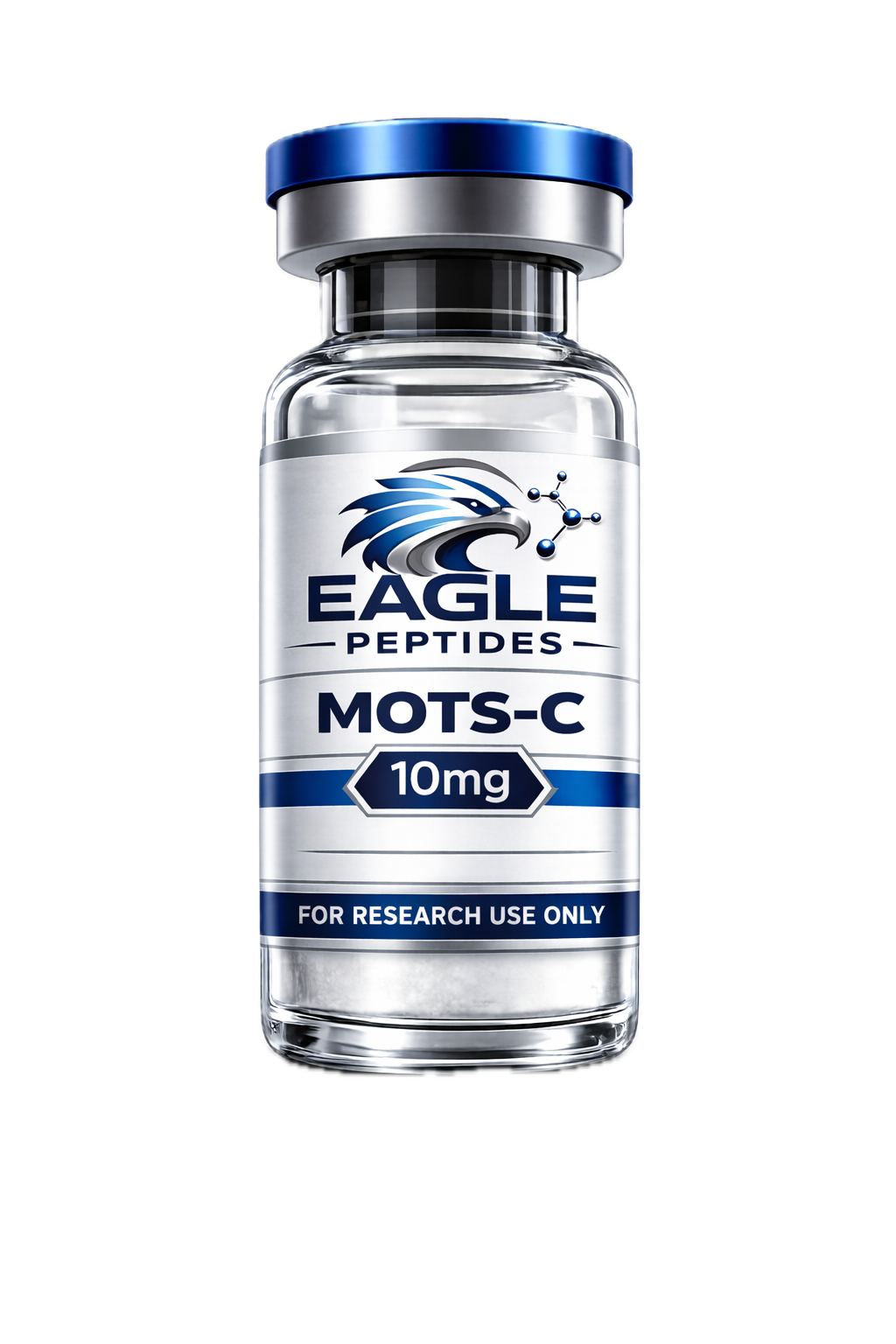
Mots-C 10mg
Mots-C 10mg
Couldn't load pickup availability
MOTS-c Peptide Overview
MOTS-c (short for “mitochondrial open reading frame of the 12S rRNA-c”) is a 16–amino-acid mitochondrial-encoded microprotein that acts as a signaling molecule involved in metabolic regulation. It was first described in 2015, and early work showed that MOTS-c can influence whole-body metabolism by acting on skeletal muscle and other tissues, with downstream effects on glucose handling and energy balance in preclinical models.
Metabolic and Body-Composition Research on MOTS-c
Improves insulin sensitivity and glucose control in preclinical models
In foundational mouse studies, MOTS-c administration prevented age-associated and high-fat-diet–associated insulin resistance and reduced diet-associated weight gain/obesity phenotypes, supporting a role in metabolic homeostasis.
Activates AMPK-linked metabolic pathways
Mechanistic work indicates MOTS-c can increase intracellular intermediates that connect to AMPK signaling, a central regulator of energy metabolism, and this is often discussed as part of why MOTS-c produces “exercise-like” metabolic effects in experimental settings.
Exercise, Muscle Signaling, and “Exercise-Mimetic” Evidence
Exercise increases endogenous MOTS-c in humans
Human studies report that exercise can increase MOTS-c expression in skeletal muscle and/or circulating levels, supporting the idea that MOTS-c participates in exercise-responsive mitochondrial signaling.
Links to metabolic markers in an exercise intervention cohort
In a 16-week aerobic + resistance exercise intervention in breast cancer survivors, investigators reported increased circulating MOTS-c (in one subgroup) and associations between post-exercise MOTS-c levels and improvements in body composition and metabolic/inflammatory markers. (These are correlational findings and don’t prove MOTS-c causes the improvements.)
Vascular and Tissue-Protective Preclinical Findings
Muscle and metabolic protection in animal models
Beyond glucose metabolism, more recent mechanistic work reports that MOTS-c can influence skeletal muscle physiology (including glucose uptake and muscle mass outcomes) through identified binding partners and signaling effects in preclinical systems.
Human clinical development note (
MOTS-c itself has not been broadly established as a therapeutic in large, modern clinical trials. However, a MOTS-c analog (CB4211) has been evaluated in a Phase 1a/1b clinical study design for safety/tolerability and pharmacology endpoints.
MOTS-c Peptide Specifications
From NIH PubChem, MOTS-c (human) is listed with:
-
CAS Number: 1627580-64-6
-
Molecular Formula: C101H152N28O22S (PubChem listing for “MOTS-c (human)”)
-
Molecular Weight: 2174.6 g/mol
(Note: catalogs/suppliers sometimes list salt forms (e.g., acetate) that can change reported mass.)
Important Notice
This information is provided for scientific and educational purposes. Any material described as MOTS-c should be positioned consistently as a research compound for in vitro laboratory use by qualified professionals, and not marketed or labeled as a drug, dietary supplement, food, or cosmetic.
References
-
Lee C, et al. The Mitochondrial-Derived Peptide MOTS-c Promotes Metabolic Homeostasis and Reduces Obesity and Insulin Resistance. Cell Metabolism (2015).
-
Kim SJ, et al. The mitochondrial-derived peptide MOTS-c is a regulator of metabolic homeostasis. (Wiley / Physiology journal platform)
-
Lee C, Kim KH, Cohen P. MOTS-c: A novel mitochondrial-derived peptide regulating muscle and fat metabolism. (PMC full text available)
-
Reynolds JC, et al. MOTS-c is an exercise-induced mitochondrial-encoded regulator (human exercise induction reported). Nature Communications (2021).
-
Dieli-Conwright CM, et al. Effect of aerobic and resistance exercise on the mitochondrial peptide MOTS-c…Scientific Reports (2021).
-
Kumagai H, et al. MOTS-c modulates skeletal muscle function by directly binding/activating CK2 (mechanistic target). (PMC / PubMed)
-
ClinicalTrials.gov. Phase 1a/1b study of CB4211 (MOTS-c analog).
-
NIH PubChem. MOTS-c (human) compound record (CAS, formula, molecular weight).
Complete Disclaimer
This product is sold exclusively for laboratory research purposes under Section 351 of the Public Health Service Act. It is not intended for human or veterinary use, nor for diagnostic, therapeutic, or cosmetic applications. Purchaser certifies they are properly licensed and equipped to handle research compounds in compliance with all local, state, and federal regulations. EaglePeptidesUSA assumes no liability for misuse or unauthorized handling. By purchasing, you affirm this material will not be introduced into interstate commerce or used in food/drug products.
Share