My Store
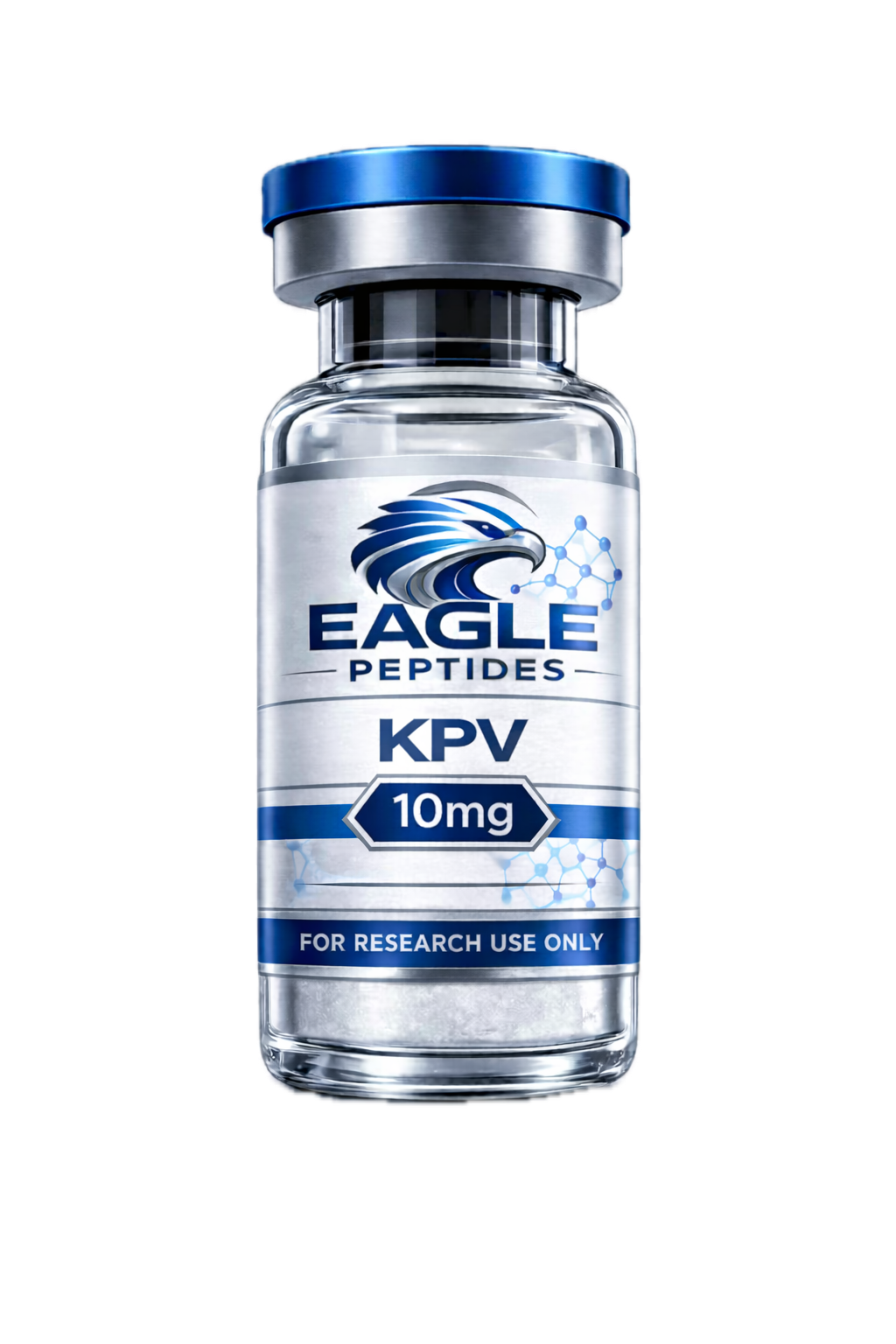
KPV 10mg
KPV 10mg
Couldn't load pickup availability
KPV Peptide Overview
KPV is a synthetic tripeptide composed of L-lysine–L-proline–L-valine (Lys-Pro-Val). It represents the C-terminal fragment of α-melanocyte-stimulating hormone (α-MSH) and retains many of α-MSH’s anti-inflammatory and immunomodulatory properties, while lacking melanogenic (pigmentation-stimulating) activity. KPV has been studied primarily in cellular and animal models of inflammation, particularly within the gastrointestinal tract and skin.
Anti-Inflammatory and Immunomodulatory Research
Suppression of pro-inflammatory cytokines
KPV has been shown to inhibit the production of pro-inflammatory cytokines, including tumor necrosis factor-α (TNF-α), interleukin-6 (IL-6), and interferon-γ (IFN-γ), in immune and epithelial cell models. These effects mirror the anti-inflammatory signaling of α-MSH but with a smaller peptide structure.
Supported by:
Catania et al., Journal of Leukocyte Biology; Brzoska et al., Endocrine Reviews
Modulation of NF-κB signaling
Experimental studies indicate that KPV can suppress NF-κB activation, a central transcription factor involved in inflammatory gene expression. Inhibition of this pathway is considered a key mechanism underlying KPV’s anti-inflammatory activity.
Supported by:
Manna & Aggarwal, Journal of Immunology; Luger et al., FASEB Journal
Gastrointestinal and Epithelial Research
Protection in models of intestinal inflammation
KPV has been studied in animal models of colitis and intestinal inflammation, where it reduced inflammatory markers, preserved epithelial barrier integrity, and improved histologic outcomes. These findings support interest in KPV as a research tool for studying inflammatory bowel disease mechanisms.
Supported by:
Furuta et al., Inflammatory Bowel Diseases; Kannengiesser et al., Journal of Pharmacology and Experimental Therapeutics
Effects on epithelial cells
In vitro studies show that KPV can directly act on epithelial cells, reducing inflammatory signaling without suppressing normal cellular function. This property distinguishes KPV from broad immunosuppressive agents in experimental systems.
Supported by:
Luger et al., FASEB Journal
Dermatologic and Barrier-Function Research
Anti-inflammatory activity in skin models
Because α-MSH plays a role in cutaneous immune regulation, KPV has been explored in skin inflammation models, where it reduced cytokine release and inflammatory signaling in keratinocytes. Importantly, KPV does not stimulate melanogenesis, differentiating it from full-length α-MSH.
Supported by:
Brzoska et al., Journal of Investigative Dermatology
KPV Peptide Specifications
-
Sequence: Lys-Pro-Val (KPV)
-
Peptide Class: Tripeptide (α-MSH C-terminal fragment)
-
Molecular Formula: C₁₆H₃₀N₄O₄
-
Molecular Weight: ~346.4 g/mol
-
Form: Lyophilized powder in sterile glass vial
-
Purity: ≥98% (research grade)
-
Color: White to off-white powder
-
Storage: Refrigerate after reconstitution
Important Notice
KPV is supplied solely for in vitro laboratory research by qualified professionals. It is not approved by the U.S. Food and Drug Administration (FDA) for human or veterinary use and must not be marketed, labeled, or represented as a drug, dietary supplement, cosmetic, or food product.
References
-
Catania A, et al. The neuropeptide α-MSH: a key player in anti-inflammatory and immunomodulatory processes. Journal of Leukocyte Biology.
https://pubmed.ncbi.nlm.nih.gov/12488453/ -
Luger TA, et al. α-Melanocyte-stimulating hormone and related peptides: mechanisms of anti-inflammatory action. FASEB Journal.
https://pubmed.ncbi.nlm.nih.gov/8878450/ -
Brzoska T, et al. α-MSH peptides and skin immune homeostasis. Journal of Investigative Dermatology.
https://pubmed.ncbi.nlm.nih.gov/12925238/ -
Furuta GT, et al. Anti-inflammatory effects of α-MSH-derived peptides in experimental colitis. Inflammatory Bowel Diseases.
https://pubmed.ncbi.nlm.nih.gov/15626891/ -
Kannengiesser K, et al. α-MSH fragments suppress intestinal inflammation via NF-κB inhibition. Journal of Pharmacology and Experimental Therapeutics.
https://pubmed.ncbi.nlm.nih.gov/15102941/ -
Manna SK, Aggarwal BB. α-MSH inhibits NF-κB activation and inflammatory gene expression. Journal of Immunology.
https://pubmed.ncbi.nlm.nih.gov/10706615/
Complete Disclaimer
This product is sold exclusively for laboratory research purposes under Section 351 of the Public Health Service Act. It is not intended for human or veterinary use, nor for diagnostic, therapeutic, or cosmetic applications. Purchaser certifies they are properly licensed and equipped to handle research compounds in compliance with all local, state, and federal regulations. EaglePeptidesUSA assumes no liability for misuse or unauthorized handling. By purchasing, you affirm this material will not be introduced into interstate commerce or used in food/drug products.
Share